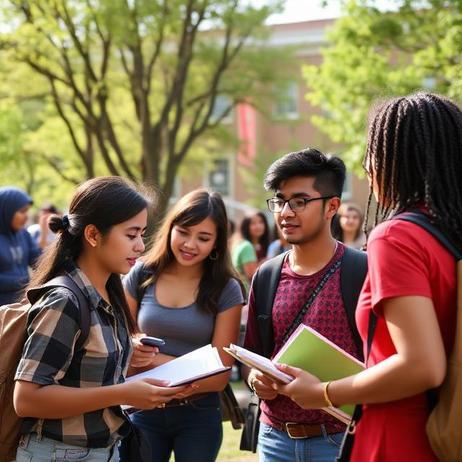
For many global students, the United States remains one of the most attractive destinations for higher education. While four-year universities often dominate the conversation, community colleges have become an increasingly popular and practical pathway. A common question persists: can international students attend community college in the U.S.? The answer is yes, and in 2026, the opportunities are broader and more accessible than ever.
This guide explains how international students can enroll, what requirements they must meet, and why community colleges are a strategic choice for academic and career success.
Understanding Community Colleges in the U.S.
Community colleges are two-year public institutions that offer associate degrees, certificates, and workforce training programs. Many also provide transfer pathways to four-year universities.
For international students, these institutions offer several advantages:
Lower tuition compared to universities
Flexible admissions requirements
Smaller class sizes
Strong academic support services
Transfer agreements with top universities
In 2026, community colleges are also expanding global recruitment efforts, making them more welcoming and better equipped to support international students than ever before.
Can International Students Attend Community College?
Yes, international students can attend community college in the U.S., provided they meet specific academic, financial, and immigration requirements.
Most community colleges are certified under the Student and Exchange Visitor Program (SEVP), which allows them to issue the Form I-20 required for an F-1 student visa. You can verify certified schools through the U.S. Department of Homeland Security’s official database:
studyinthestates.dhs.gov/school-search
Key Requirements for International Students
1. Admission Requirements
Community colleges generally have more accessible admissions criteria than four-year universities. However, international applicants must still provide:
Proof of secondary school completion (high school diploma or equivalent)
Academic transcripts, often translated into English
English language proficiency scores, such as TOEFL, IELTS, or Duolingo
A completed application form
Some colleges in 2026 are expanding test-optional policies, especially for students enrolling in intensive English programs.
2. Student Visa (F-1)
To study full-time, international students must obtain an F-1 visa. The process includes:
Acceptance from an SEVP-certified community college
Receipt of Form I-20
Payment of the SEVIS fee
Scheduling and attending a visa interview at a U.S. embassy or consulate
In 2026, visa processing times have stabilized compared to earlier pandemic-era delays, but early application remains critical.
3. Proof of Financial Support
Students must demonstrate they can cover tuition, living expenses, and other costs for at least one academic year.
Typical documentation includes:
Bank statements
Financial affidavits
Scholarship or sponsorship letters
Community colleges remain one of the most affordable entry points into U.S. higher education, which makes this requirement more manageable compared to universities.
Costs in 2026: What to Expect
One of the main reasons international students choose community colleges is cost. While prices vary by state and institution, the average annual expenses in 2026 are:
|
Expense Category |
Estimated Cost (Annual) |
|---|---|
|
Tuition & Fees |
$6,000 to $12,000 |
|
Housing & Living |
$8,000 to $15,000 |
|
Health Insurance |
$1,000 to $2,000 |
|
Books & Supplies |
$1,000 to $1,500 |
|
Total |
$16,000 to $30,000 |
These figures are significantly lower than the $30,000 to $60,000 annual cost typical at many four-year universities.
Benefits of Choosing a Community College
Affordable Pathway to a Bachelor’s Degree
Many international students begin at a community college and transfer to a four-year university after two years. This “2+2” model allows students to:
Save money on tuition
Adjust to the U.S. academic system
Improve English proficiency
According to the National Center for Education Statistics, community colleges enroll a substantial portion of international undergraduates, particularly those pursuing transfer pathways:
nces.ed.gov
Smaller Class Sizes and Support
Community colleges typically offer more individualized attention than large universities. This can be especially beneficial for international students adjusting to a new education system.
Support services often include:
Academic advising
English language support
Tutoring centers
International student offices
Flexible Programs and Career Training
In addition to academic degrees, community colleges offer career-focused programs in fields such as:
Information technology
Healthcare
Business administration
Engineering technology
These programs can lead directly to employment or provide a foundation for further study.
Work Opportunities for International Students
F-1 visa holders can work under certain conditions:
On-Campus Employment
Students may work up to 20 hours per week during the academic term and full-time during breaks.
Optional Practical Training (OPT)
OPT allows students to gain work experience related to their field of study for up to 12 months after graduation. STEM graduates may qualify for a 24-month extension.
In 2026, there is continued emphasis on aligning education with workforce needs, making OPT an increasingly valuable component of the international student experience.
Housing Options
Unlike many universities, community colleges typically do not offer on-campus housing. International students usually choose from:
Homestays with local families
Shared apartments
Private rentals
Some colleges partner with housing services to help international students find safe and affordable accommodations.
Challenges to Consider
While community colleges offer many benefits, there are also challenges:
Limited campus housing options
Fewer extracurricular activities compared to large universities
Need for careful transfer planning
Cultural and academic adjustment
However, many institutions have strengthened support systems in recent years to address these concerns.
2026 Trends Affecting International Students
Several developments are shaping the experience of international students at community colleges:
Expanded Global Recruitment
Colleges are investing in international partnerships and virtual recruitment, making applications more accessible worldwide.
Increased Transfer Agreements
More institutions are forming guaranteed transfer pathways with universities, simplifying the transition process.
Technology Integration
Hybrid learning options and digital support services are now standard, improving flexibility for students.
Focus on Career Outcomes
Programs are increasingly aligned with labor market demands, especially in STEM and healthcare fields.
How to Choose the Right Community College
When evaluating options, international students should consider:
SEVP certification status
Transfer agreements with universities
Total cost of attendance
Location and living expenses
Available support services
Prospective students can explore additional guidance and school comparisons through Community College Review:
www.communitycollegereview.com/
FAQ: International Students and Community College
Can international students attend community college in the U.S. without a visa?
No. Full-time students must obtain an F-1 visa.
Do community colleges accept international students with lower English scores?
Many offer conditional admission with English language support programs.
Can I transfer from a community college to a university?
Yes. This is a common and well-established pathway.
Are scholarships available for international students?
Some community colleges offer limited scholarships, but most financial aid is not available to international students.
Conclusion
So, can international students attend community college in the U.S.? Absolutely. In 2026, community colleges represent one of the most accessible, affordable, and flexible entry points into American higher education.
With lower costs, supportive learning environments, and strong transfer opportunities, these institutions are an increasingly strategic choice for students around the world. By understanding visa requirements, financial expectations, and academic pathways, international students can make informed decisions and build a successful educational journey in the United States.