Updated
Preparing for Placement Tests in 2026: Student Guide
Preparing for Placement Tests in 2026, what students, parents, and educators need to know about formats, prep strategies, and placement changes.

Preparing for Placement Tests in 2026: What Students Need to Know

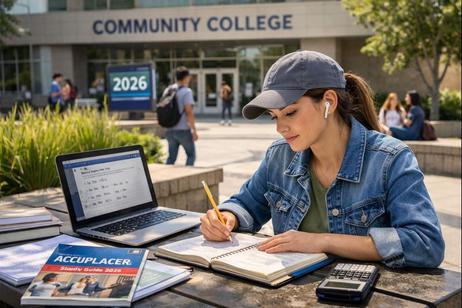
Preparing for Placement Tests in 2026 has become a central concern for students entering community colleges across the United States. As placement testing continues to evolve, students, parents, and educators must understand how placement tests work in 2026, what has changed in recent years, and how students can prepare effectively. Preparing for Placement Tests in 2026 is no longer just about test-taking skills; it now involves academic history, advising, and multiple measures that reflect a student’s broader readiness for college-level work.

Community colleges increasingly rely on placement systems designed to support student success, reduce unnecessary remediation, and accelerate progress toward degrees and certificates. Preparing for Placement Tests in 2026 requires awareness of these trends, along with practical strategies that help students start college on the right academic path.

What Are Placement Tests and Why They Matter in 2026

Placement tests help colleges determine the appropriate starting level for students in math, English, and sometimes reading or English as a Second Language. Preparing for Placement Tests in 2026 is important because placement decisions affect course selection, time to graduation, and overall college costs.

Most community colleges use placement tools to answer key questions:

• Is a student ready for college-level math and English
• Does a student need additional academic support
• Which courses best match a student’s skills and goals

Preparing for Placement Tests in 2026 is particularly important because misplacement can
. . .read more

Community College Scholarships with January Deadlines 2025–26

Updated
|
Community College Scholarships with January Deadlines 2025–26
Explore community college scholarships with January deadlines for 2025–26, including eligibility tips, award amounts, and planning strategies.

Community College Scholarships with January Deadlines: 2025–26 List

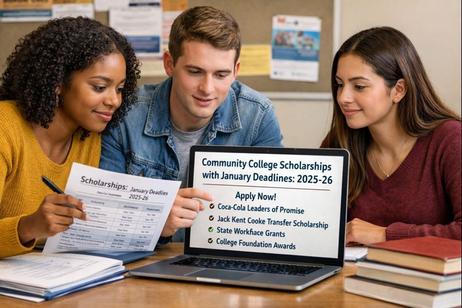
January is one of the most important months on the financial aid calendar for community college students. While many learners associate scholarship season with spring, a significant number of high-value awards close in January. Missing these deadlines can mean losing access to thousands of dollars in grant aid that does not need to be repaid.

This guide highlights major community college scholarships with January deadlines for the 2025–26 academic year, explains who should apply, and offers practical strategies for staying competitive. Parents, students, and counselors will find actionable insights to help maximize funding opportunities early in the year.

Why January Matters for Community College Scholarships

January deadlines tend to be associated with national and foundation-funded scholarships that require longer review periods. These awards often support high-achieving students, transfer-bound learners, and those with financial need or leadership experience.

For community college students, January is especially critical because:

  • Many transfer scholarships require early selection cycles.

  • Academic honor societies finalize nominee lists during winter term.

  • Scholarship committees want fall semester grades included.

  • FAFSA completion often aligns with January planning timelines.

Students who prepare applications during the fall term are best positioned to compete for these limited and often generous awards.

Major Community College Scholarships with January Deadlines (2025–26)

Below is

. . .read more

Community College vs. Bootcamps for Tech Careers in 2026

Updated
|
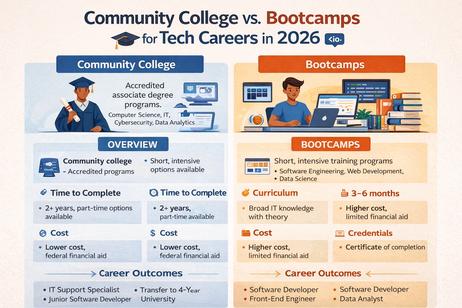
Community College vs. Bootcamps for Tech Careers in 2026
Community college vs. bootcamps in 2026. Compare cost, outcomes, credentials, and hiring trends to choose the best tech career path.

Community College vs. Bootcamps: Which Is Better for Tech Careers in 2026?

The debate over community college vs. bootcamps has intensified as the technology job market evolves in 2026. Parents, students, and educators are asking whether a traditional academic pathway or an accelerated training model better prepares learners for tech careers. With rising tuition concerns, shifting employer expectations, and rapid changes in artificial intelligence, cybersecurity, and software development, the community college vs. bootcamps question has real financial and career implications.

This article examines community college vs. bootcamps through the lens of cost, curriculum, credentials, employer perceptions, and long-term outcomes. By the end, readers should have a clearer understanding of which option fits different types of learners and career goals in 2026.

Understanding the Two Pathways

What Community Colleges Offer in 2026

In the community college vs. bootcamps discussion, community colleges represent the more traditional route. Community colleges offer associate degrees, certificates, and transfer pathways aligned with regional workforce needs. In 2026, many community colleges have modernized their technology programs, adding applied AI, cloud computing, data analytics, and cybersecurity tracks.

Key features include:

  • Accredited associate degrees in computer science, information technology, and software development

  • General education courses that build communication, math, and critical thinking skills

  • Partnerships with local employers and four-year institutions

  • Eligibility for federal financial aid and workforce grants

. . .read more

How to Build a Class Schedule That Fits Your Life (Spring 2026)

Updated
|
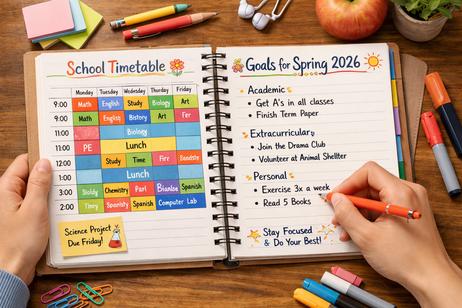
How to Build a Class Schedule That Fits Your Life (Spring 2026)
Learn how to build a class schedule that fits your life with expert tips, updated strategies for Spring 2026, and practical planning tools for students and families.

How to Build a Class Schedule That Fits Your Life (Spring 2026 Edition)

Creating a class schedule is one of the most important academic planning tasks students face each year. The process of how to build a class schedule that fits your life has changed in subtle but meaningful ways for Spring 2026, with new advising tools, hybrid learning options, and a renewed focus on wellness and balance. Whether you are a high school student planning electives, a college student navigating degree requirements, or a parent helping your child plan a pathway to success, this guide provides clear, expert-backed strategies for how to build a class schedule that fits your life without stress.

In this Spring 2026 edition, we emphasize strategies that meet modern challenges such as balancing part‑time work, mental health breaks, family commitments, and evolving academic goals. We break down key steps, practical checklists, and expert tips to help you successfully build a class schedule that fits your life.

Why It Matters: The Purpose of a Well‑Built Schedule

When you learn how to build a class schedule that fits your life, you are doing more than picking classes. You are:

  • Aligning coursework with academic goals.

  • Protecting time for rest, extracurriculars, and work.

  • Avoiding burnout and schedule conflicts.

  • Enhancing focus and long‑term success.

A schedule that fits your life can

. . .read more

Top 10 Jobs for Community College Graduates in 2026

Updated
|
Top 10 Jobs for Community College Graduates in 2026
Meta Description: Discover high-demand jobs for community college graduates, with current salary trends, costs, and career pathways.

10 In-Demand Jobs for Community College Graduates

Community colleges continue to provide an affordable, flexible pathway to careers that are in high demand. With tuition averaging significantly less than four-year institutions, students can enter the workforce with minimal debt while gaining practical skills. For parents and students planning ahead, understanding current trends, costs, and job prospects can guide decisions about admissions, course selection, and career planning.

1. Registered Nurse (RN)

Registered nurses are consistently in demand due to ongoing healthcare needs. Many RNs earn an associate degree in nursing (ADN) from community colleges, which typically takes two years. According to the U.S. Bureau of Labor Statistics, RNs earn a median annual salary of $79,600, with job growth projected at 6% through 2031.

Admissions and Planning: ADN programs require prerequisites such as biology and chemistry, and competitive programs often have early application deadlines, typically in the fall for the following academic year. Parents should help students prepare by ensuring strong performance in science courses and timely submission of applications.

2. Dental Hygienist

Dental hygienists perform preventive dental care and patient education. Community college programs for dental hygiene usually last two years and include clinical practice. Median annual salaries are around $77,000, with a projected 11% job growth through 2031.

Costs and Access: Tuition varies, with many programs costing between $6,000 and $18,000 per year for in-state students. Scholarships and federal financial aid can offset costs. Parents should consider local programs and clinical

. . .read more

Recent Articles

Test Article, Image and Content
Test Test Test Test Test Test Test Test Test Test Test Test Test Test Test Test Test Test Test Test Test Test Test Test Test Test Test Test Test Test Test Test Test Test Test Test Test Test Test Test Test Test Test Test Test Test Test Test Test Test Test Test Test Test Test Test Test Test Test Test Test Test Test Test Test Test Test Test Test Test Test Test Test Test Test Test Test Test Test Test Test Test Test Test Test Test Test Test Test Test Test Test Test Test Test Test Test Test Test Test Test Test Test Test Test Test Test Test Test Test Test Test Test Test Test Test Test Test Test Test Test Test Test Test Test Test Test Test Test Test Test Test Test Test Test Test Test Test Test Test Test Test Test Test Test Test Test Test Test Test Test Test Test Test Test Test Test Test Test Test Test Test Test Test Test Test Test Test Test Test Test Test Test Test Test Test Test Test Test Test Test Test Test Test
Faith Formation Integrated Across Subject Areas
Explore faith formation integrated across subject areas and its impact on curriculum, student outcomes, and community colleges.
Parish-Based Governance Models in Catholic Schools
Explore parish-based governance models in Catholic schools and their impact on leadership, funding, and community colleges.