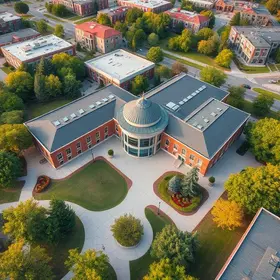



- For more than 61 years, South Coast College has helped highly motivated individuals improve their lives through education and career training. South Coast College was founded in 1961 in Long Beach, CA, as a private college called Stenotype School of Long Beach. The College relocated to Westminster in 1974, and the corporate name was changed to Whitley College. In 1980, Orange County College of Court Reporting merged into Whitley College, and the name was changed to South Coast College. The College moved from Westminster to Anaheim in 1993. Then in 2001, South Coast College relocated to a facility in the City of Orange, where it currently trains students for legal and medical careers, offering Court Reporting, Paralegal AA Degree, and Medical Assistant programs.
School Highlights
South Coast College serves 294 students (59% of students are full-time).
The college's student-teacher ratio of 18:1 is lower than the state community college average of 32:1.
Minority enrollment is 73% of the student body (majority Hispanic), which is less than the state average of 77%.
Quick Facts (2026)
- Enrollment: 294 students
- Student-teacher ratio: 18:1
- Minority enrollment: 73%
- Source: Verified school update
School Overview
The teacher population of 16 teachers has stayed relatively flat over five years.
South Coast College
(CA) Community College Avg.
Carnegie Classification
Special Focus Two-Year: Other Fields
Baccalaureate/Associate's Colleges: Associate's Dominant
Institution Level
At least 2 but less than 4 years
At least 2 but less than 4 years
Institution Control
Private for-profit
Public
Total Faculty
16 staff
315 staff
Number of Programs Offered
4
12
Student Body
The student population of South Coast College has grown by 15% over five years.
The student-teacher ratio of 18:1 has increased from 16:1 over five years.
The South Coast College diversity score of 0.72 is more than the state average of 0.70. The school's diversity has declined by 13% over five years.
Total Enrollment
294 students
9,796 students
Student-Teacher Ratio
18:1
32:1
# Full-Time Students
173 students
1,259 students
# Part-Time Students
121 students
8,537 students
# Enrollment Undergraduate
294 students
242 students
# Full-Time Undergraduate Students
173 students
1,250 students
# Full-Time Graduate Students
n/a
63 students
# Part-Time Undergraduate Students
121 students
8,299 students
# Part-Time Graduate Students
n/a
10 students
Total Dormitory Capacity
n/a
121 students
% American Indian/Alaskan
2%
n/a
% Asian
7%
13%
% Hispanic
43%
47%
% Black
4%
7%
% White
27%
23%
% Hawaiian
3%
1%
% Two or more races
12%
5%
% Non Resident races
n/a
1%
% Unknown races
3%
3%
Diversity Score
0.72
0.70
College Completion Rate (Students who graduate in less than 4 years)
0.2%
42%
College Completion Rate (Students who graduate in 4 years or more than 4 years)
n/a
43%
Average Graduate Earnings (10 Years)
$33,000
$32,200
Tuition and Acceptance Rate
% Students Receiving Some Financial Aid
75%
85%
Median Debt for Graduates
$21,790
$10,500
Median Debt for Dropouts
$20,375
$6,239
Acceptance Rate
n/a
93%
Source: 2024 (or latest year available) Integrated Postsecondary Education Data System (IPEDS) , School Administrators
Recent Articles

Test Article, Image and Content
Test Test Test Test Test Test Test Test Test Test Test Test Test Test Test Test Test Test Test Test Test Test Test Test Test Test Test Test Test Test Test Test Test Test Test Test Test Test Test Test Test Test Test Test Test Test Test Test Test Test Test Test Test Test Test Test Test Test Test Test Test Test Test Test Test Test Test Test Test Test Test Test Test Test Test Test Test Test Test Test Test Test Test Test Test Test Test Test Test Test Test Test Test Test Test Test Test Test Test Test Test Test Test Test Test Test Test Test Test Test Test Test Test Test Test Test Test Test Test Test Test Test Test Test Test Test Test Test Test Test Test Test Test Test Test Test Test Test Test Test Test Test Test Test Test Test Test Test Test Test Test Test Test Test Test Test Test Test Test Test Test Test Test Test Test Test Test Test Test Test Test Test Test Test Test Test Test Test Test Test Test Test Test Test

Faith Formation Integrated Across Subject Areas
Explore faith formation integrated across subject areas and its impact on curriculum, student outcomes, and community colleges.

Parish-Based Governance Models in Catholic Schools
Explore parish-based governance models in Catholic schools and their impact on leadership, funding, and community colleges.