Updated
|
Loans and Free Tuition for Community College Students
Learn more about how community colleges and federal loans can help you affordably finance your community college education.
Courtesy Department of Education

When the economy slows down, individuals across the country struggle to cope with layoffs. Even after the economy begins to grow again, it takes some time for employment levels to rebound. As a result, many workers find that their once-desirable resume is no longer up to par in a fiercely competitive job market.

To help unemployed workers stay at the forefront of training, some states offer free community college tuition. Specifically, states such as Kentucky and New Jersey are seeking to stimulate their community’s knowledge and job application appeal by providing free classes and affordable tuition to workers in need. Depending on each school’s programs, laid-off employees can either benefit from completely free tuition or significant tuition discounts.

This video shows a student explaining how he went to community college tuition-free.

Kentucky Community Colleges

The Kentucky Community and Technical College System offers extra tuition support to Kentucky residents who have recently encountered job loss. Dubbed the “Career Transitions Initiative,” the program seeks to provide workforce training in high-demand, high-wage jobs. Set into motion with the support of Governor Steve Beshear, newly laid-off workers are provided with a 50 percent tuition reduction for up to 6 credit hours each semester. This discount is available at 16 colleges and 67 campuses throughout Kentucky and students can utilize it for a full year of education or training. Additionally, this program is designed to help provide newly

. . .read more

Renewable Energy Creates Opportunities

Updated
|
Renewable Energy Creates Opportunities
Learn how community colleges are evolving to provide opportunities in the growing fields of renewable energy.

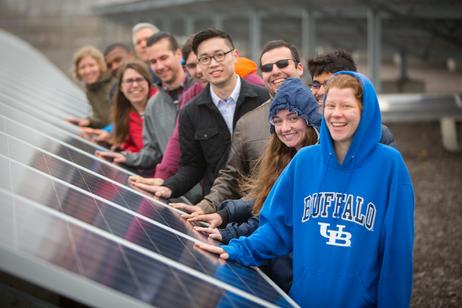
As the demand for environmentally valuable technologies is rising, community colleges across the country are implementing programs to provide students with the skills and knowledge to compete in the future "green collar" job force.

According to The Times Herald-Record, a "green collar" job is a job that "has been upgraded to address the environmental changes of our country." Generated by the need for energy efficiency, careers in fields of energy auditors, weatherization workers, solar electric and water installers, and insulation installers, are all jobs that are projected to be in high demand.

Since the demand is already on the rise, there is already a need for millions of "green collar" workers, and the training demands are immediate. Acknowledging this increasing demand, community colleges are implementing revolutionary programs to prepare students for careers as "green collar" workers in fields of renewable energy. With competitive pay and incredible demand, students are eager to join programs that will lead to sustainable and valuable careers after college.

Community Colleges Gaining Newsworthy Recognition

While community colleges across the country are implementing renewable and green collar programs, Cape Fear Community College, Cape Cod Community College, and Columbia George Community College are just three of the many institutions that have gained media attention for their newsworthy programs and course offerings.

Cape Fear Community College

In Wilmington North Carolina, Cape Fear Community College's Engineering Department has developed a renewable energy lab. Focusing on the research and use of hydrogen fuel cells,

. . .read more

How Community Colleges are Outperforming 4 Year Universities

Updated
|
How Community Colleges are Outperforming 4 Year Universities
Learn how community colleges are outperforming 4 year universities in several different areas.

While four-year universities are traditionally believed to outperform community colleges, new research highlights that the contrary is often true. With the evolution of revolutionary and competitive community college programs across the country, these institutions are providing students with more financially reasonable, convenient, and equitably challenging academic experiences.

Class Size and Student-Teacher Interaction

In his study of community colleges, Kevin Carey surveyed students from both community colleges and four-year universities. Carey reached the steady conclusion that community college students consistently reported classroom experiences of greater interaction, discussion, and one-on-one opportunities, versus university survey results. According to his research, over 2/3 of community college students engage in class discussions by asking questions and interacting; on the contrary, only of polled university students reported this experience. Continuing, surveys revealed that community college students received more prompt feedback from professors, in addition to reporting more opportunities for student and professor interaction.

This video illustrates the differences between community colleges and four-year colleges.

Indeed, community colleges tend to have smaller class sizes, which naturally lend to greater interaction between students and teachers. In contrast, many universities, especially public ones, have larger auditorium class sizes, prompting some students to feel disconnected from their professors.

Academic Challenges and Comparisons

Also found through his educational surveys, Kevin Carey reports that most significantly, the academic challenges of the studied community colleges prove to be comparable to the four-year university experiences. Since universities

. . .read more

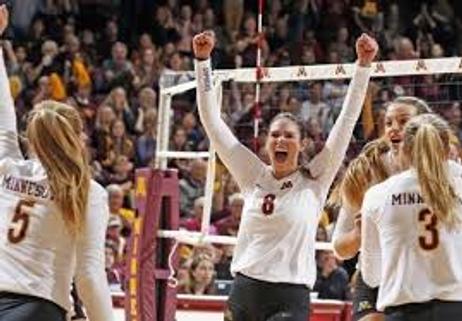
Professional Athletic Opportunities for Community College Students

Updated
|
Professional Athletic Opportunities for Community College Students
Learn how community college can facilitate professional athletic opportunities for its students.

While many high school students may be committed to their sport of focus, the collegiate programs in athleticism provide a much more intense base for improvement. Practices are longer, more frequent, more intense, and provide more discipline. As students work towards careers as professional athletes, students can utilize the opportunities of a community college athletic program to improve their mental and physical success.

The Benefits of Community Colleges for Striving Professional Athletes

An Expanding Number of Programs

In recent years, more community colleges are initiating athletic programs that expand the number of teams with the existing number of programs. “More students are wisely selecting the community college as the entrance point to higher education because of affordability, accessibility, and academic rigor,” according to researchers Laura Byrd and Mitchell Williams. As the development of strong athletic programs continues, “community colleges across the nation are establishing or expanding intercollegiate athletics programs at a consistent pace,” making the support for potential athletes more foundational and accessible.

This video offers an overview of the sports program at Rockingham Community College.

Physical and Mental Training

Students looking to pursue careers as professional athletes must choose a school that will not only provide them with beneficial athletic training, but mental and technical instruction opportunities as well. Since the community college training experiences are intense and more individualized than high school training opportunities, college coaches are able to work with

. . .read more

Obtaining Your Bachelor's Degree at a Community College

Updated
|
Obtaining Your Bachelor's Degree at a Community College
Explore the evolving landscape of community colleges offering bachelor's degrees, addressing affordability, accessibility, and workforce needs.

Obtaining Your Bachelor's Degree at a Community College

In recent years, community colleges have been experimenting with bachelor's degree programs.

  • With great success, many states are now encouraging community colleges to offer bachelor’s degree programs.
  • The reason for this is they promote the acquisition of higher education for the greater public good.
  • Community colleges also provide degree programs in an increasingly wide range of majors and subject areas.

The Growing Trend

Baccalaureate degrees have traditionally only been earned through a university or four-year institution.

It devised a mission statement that it intended to: "promote the development and acceptance of the community college baccalaureate degree as a means of addressing the national problems of student access, demand, and cost.” In support, TheAmerican Association of Community Colleges has also recognized the community college baccalaureate as, “an emerging development in higher education.”

The reason community college baccalaureate degrees have become so popular is threefold.

  1. Community colleges are able to respond to increased workforce needs more quickly than four-year institutions. For example, increased demand in recent years for qualified healthcare workers, such as nurses, has led to the explosive growth of bachelor's degree programs in nursing at the community college level.
  2. Community colleges have been able to respond to economic pressures facing students and communities because, on
. . .read more

Recent Articles

Test Article, Image and Content
Test Test Test Test Test Test Test Test Test Test Test Test Test Test Test Test Test Test Test Test Test Test Test Test Test Test Test Test Test Test Test Test Test Test Test Test Test Test Test Test Test Test Test Test Test Test Test Test Test Test Test Test Test Test Test Test Test Test Test Test Test Test Test Test Test Test Test Test Test Test Test Test Test Test Test Test Test Test Test Test Test Test Test Test Test Test Test Test Test Test Test Test Test Test Test Test Test Test Test Test Test Test Test Test Test Test Test Test Test Test Test Test Test Test Test Test Test Test Test Test Test Test Test Test Test Test Test Test Test Test Test Test Test Test Test Test Test Test Test Test Test Test Test Test Test Test Test Test Test Test Test Test Test Test Test Test Test Test Test Test Test Test Test Test Test Test Test Test Test Test Test Test Test Test Test Test Test Test Test Test Test Test Test Test
Faith Formation Integrated Across Subject Areas
Explore faith formation integrated across subject areas and its impact on curriculum, student outcomes, and community colleges.
Parish-Based Governance Models in Catholic Schools
Explore parish-based governance models in Catholic schools and their impact on leadership, funding, and community colleges.