Updated
|
Seniors Planning for Community College
Learn what steps a senior should take in planning for community college.

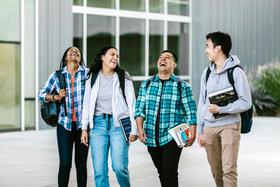
While each high school year has unique and specific goals, seniors can begin to prepare for their step in higher education as they make plans to attend community college.

Developing a Plan for Enrollment

As a senior, you will make many important decisions regarding the next phase of your life. Choosing a community college means finding a campus that is in line with your goals, both academically and professionally.

Since community colleges can provide students with different areas of academic focus, students can begin their investigation of specific schools by requesting catalogs from each community college. Catalogs and websites will provide information about programs, course schedules, and graduation plans. After reviewing information, a senior can also make an appointment with a college counselor. A counselor can discuss with student plans for a career, job interests, and professional guidance. After narrowing down career options, a counselor and senior can discuss whether or not a particular college is a right fit for specific areas of study.

This video offers suggestions for planning your first year at community college.

Financial Planning - Anticipating the Costs

As the costs of college can often be expensive, high school seniors and parents can make the appropriate plans by reviewing financial aid and loan options.

Remember, community college is indeed much more affordable than traditional four-year institutions. However, planning ahead will help the senior determine whether or not to


. . .read more

Choosing Electives for a Rounded Education

Updated
|
Choosing Electives for a Rounded Education
Learn how choosing electives can be enjoyable and professionally beneficial.

Whether you have already decided on a career path, or if you’re looking to broaden your horizons, community colleges offer a wide variety of elective courses that can expand your personal and professional networks, while also leading to a fulfilling educational experience.

The Personal Benefits of Elective Courses

While every degree program has specific requirements, electives allow students to test the waters outside their main area of focus. By exploring elective options, you may gain a new perspective on your professional calling. Regardless of whether or not your electives lead you to a new career, or simply add to your community college experience, electives allow potential job-seeking candidates when applying for work. In fact, employers seek candidates who have well-rounded backgrounds. Showing a diverse academic background, along with your career focus, demonstrates that you are versatile and enjoy learning.

The Academic Benefits of Elective Courses

While electives often provide students with new opportunities and fulfilling educational experience, studies are also revealing that electives actually promote better thinking and learning. For example, in considering art electives, “more and more business leaders are realizing that arts education helps to prepare young people for the workplace, acknowledging that arts education develops collaborative skills, technological competencies, flexible thinking, and an appreciation for diversity,” according to Bernard Cesarone. Studies show that the study and practice of art allow students to foster better critical thinking skills, while building values that connect to fellow colleagues and peers, leading to a better-rounded employee or student.

. . .read more

Careers: In Science and Engineering

Updated
|
Careers: In Science and Engineering
Learn how community college can be a great start for becoming a scientist or engineer.

Although they were once known primarily for their vocational programs and associate degrees, community colleges have expanded their programs to serve a wider audience. And while community colleges still do an outstanding job of fulfilling their original roles, community colleges have now become a center for scientific and engineering learning.

In fact, in recent years, according to the National Science Foundation (NSF), more students have turned to community colleges to prepare them for a career in science and engineering. Research from the NSF study reveals interesting reasons why students begin their careers at a community college.

Many scientists and engineers begin at community college

Community colleges are, without a doubt, great schools. They offer many different types of programs for a wide range of academic interests. Truthfully, it is no longer fair or even accurate (if it ever was) to think of them as an “easy” two-year school for those looking to earn an associate’s degree.

Today, according to the NSF, less than 30% of community college students are looking to simply earn an associate’s degree. This means that over 70% of the students attending community colleges are looking for more than just a two-year program. These statistics reveal that many people view community colleges as a viable option when beginning their educational careers.

In fact, according to the NSF, 44% of students who earn bachelor’s and master’s degrees in the physical sciences,

. . .read more

Community Colleges and the Global Economy in 2026

Updated
|
Community Colleges and the Global Economy in 2026
Explore how community colleges support the global economy in 2026 through workforce training, innovation, and international partnerships.

This article has been updated to reflect 2026 data and recent developments.

Community colleges have long played a vital role in preparing students for local and regional employment. In 2026, their influence extends far beyond local boundaries. As globalization, technological advancement, and workforce shifts accelerate, community colleges are increasingly central to the global economy.

From workforce development to international partnerships, these institutions provide flexible, career-focused education that aligns with evolving economic demands. This updated analysis explores how community colleges contribute to the global economy today and how their role continues to expand.

The Expanding Role of Community Colleges in a Globalized Economy

Community colleges serve millions of students annually across the United States, making them one of the largest entry points into higher education. Their accessibility, affordability, and adaptability position them uniquely to respond to global workforce needs.

In 2026, their role has expanded in three key ways:

  • Preparing students for globally connected industries
  • Supporting workforce reskilling amid automation
  • Partnering with international institutions and employers

These functions are increasingly critical as economies become more interconnected and technology-driven.

Workforce Development for Global Industries

Community colleges are closely aligned with labor market demands, particularly in industries that operate on a global scale.

High-Demand Sectors

Programs have expanded significantly in areas such as:

  • Healthcare and allied health professions
  • Information technology and cybersecurity
  • Advanced manufacturing
  • Renewable energy and sustainability

These sectors require workers who can operate in globally integrated supply chains and adapt to rapid technological change.

According to the U.S. Bureau of

. . .read more

Community Colleges and Homeland Security

Updated
|
Community Colleges and Homeland Security
Learn the important role community colleges have take in improving homeland security.

Certain events have unexpected results. The tragic events of 9/11 and Hurricane Katrina have unexpectedly affected community colleges throughout the United States. Such moments in American history showed the power of, and the necessity for, strong communities, and that is why community colleges around the nation have developed some of the most significant first responder training programs ever seen.

Although it is an easy idea to overlook, the community aspect of community college, it is just as important as the college part. Ever since their inception, community colleges were expected to support and grow with the community they serve. Even today, the teachers, the students, the administration – and of course the programs – are all part of the community where the community college is found. They are friends, neighbors, even family.

Thus, it is no surprise that when the community needs help, the community college is one of the first to offer aid. And when our national community needed help, the community colleges created first-rate first responder programs, all with the goal of strengthening our Homeland Security.

This video explains the purpose and function of the Department of Homeland Security.

Expanding the Programs

After September 11th and Hurricane Katrina, the nation’s community colleges initiated significant changes in their first responder programs. Some of the newer aspects of their Homeland Security goals included:

  • Participating in national initiatives, such as the Federal Emergency Management Agency’s Emergency
. . .read more

Recent Articles

Test Article, Image and Content
Test Test Test Test Test Test Test Test Test Test Test Test Test Test Test Test Test Test Test Test Test Test Test Test Test Test Test Test Test Test Test Test Test Test Test Test Test Test Test Test Test Test Test Test Test Test Test Test Test Test Test Test Test Test Test Test Test Test Test Test Test Test Test Test Test Test Test Test Test Test Test Test Test Test Test Test Test Test Test Test Test Test Test Test Test Test Test Test Test Test Test Test Test Test Test Test Test Test Test Test Test Test Test Test Test Test Test Test Test Test Test Test Test Test Test Test Test Test Test Test Test Test Test Test Test Test Test Test Test Test Test Test Test Test Test Test Test Test Test Test Test Test Test Test Test Test Test Test Test Test Test Test Test Test Test Test Test Test Test Test Test Test Test Test Test Test Test Test Test Test Test Test Test Test Test Test Test Test Test Test Test Test Test Test
Faith Formation Integrated Across Subject Areas
Explore faith formation integrated across subject areas and its impact on curriculum, student outcomes, and community colleges.
Parish-Based Governance Models in Catholic Schools
Explore parish-based governance models in Catholic schools and their impact on leadership, funding, and community colleges.